
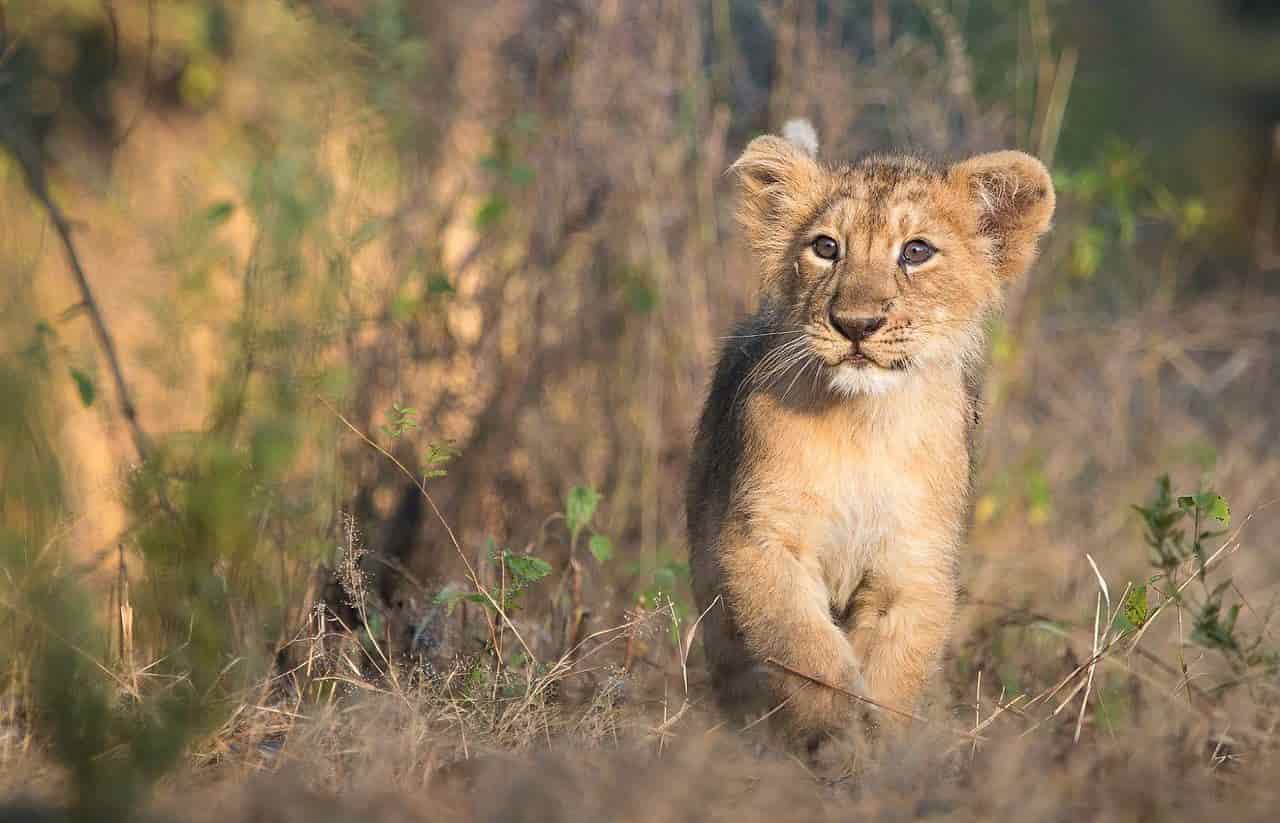
Gir National Park & Wildlife Sanctuary, one of India’s oldest and most visited wildlife sanctuaries, is the last remaining abode of Asiatic lions. The national park, also known as Sasan Gir, is about 37 miles southeast of Junagadh, a district in Gujarat. The Sasan Gir village serves as the official entrance to the sprawling Gir forest. The National Park covers a total area of 1412 square kilometers, of which 258 square kilometers are the core area and the remaining 1153 square kilometers are the wildlife sanctuary.
Indiscriminate hunting by Indian rulers and British colonists led to a sharp decline in Asiatic lion populations in the nineteenth century. At the start of the 20th century, only a dozen lions were left in the Gir forest. Junagadh’s rulers, aided by the Britishers, then took the initiative to protect the endangered species. In 1969, the Indian government came forward to safeguard the endangered species and declared the area a sanctuary. In 1980, it was designated a national park.
In 2005, the Asiatic lion population in the Gir Forest was 359. The government prohibited hunting and poaching in the area. Conservation efforts paid off, and the number of lions increased significantly. In 2015, there were 523 lions in the Gir forest. The National Park had 674 lions in 2020, according to figures released by the Gujarat state government. The Gir National Park is now the world’s only protected area where Asiatic lions are found.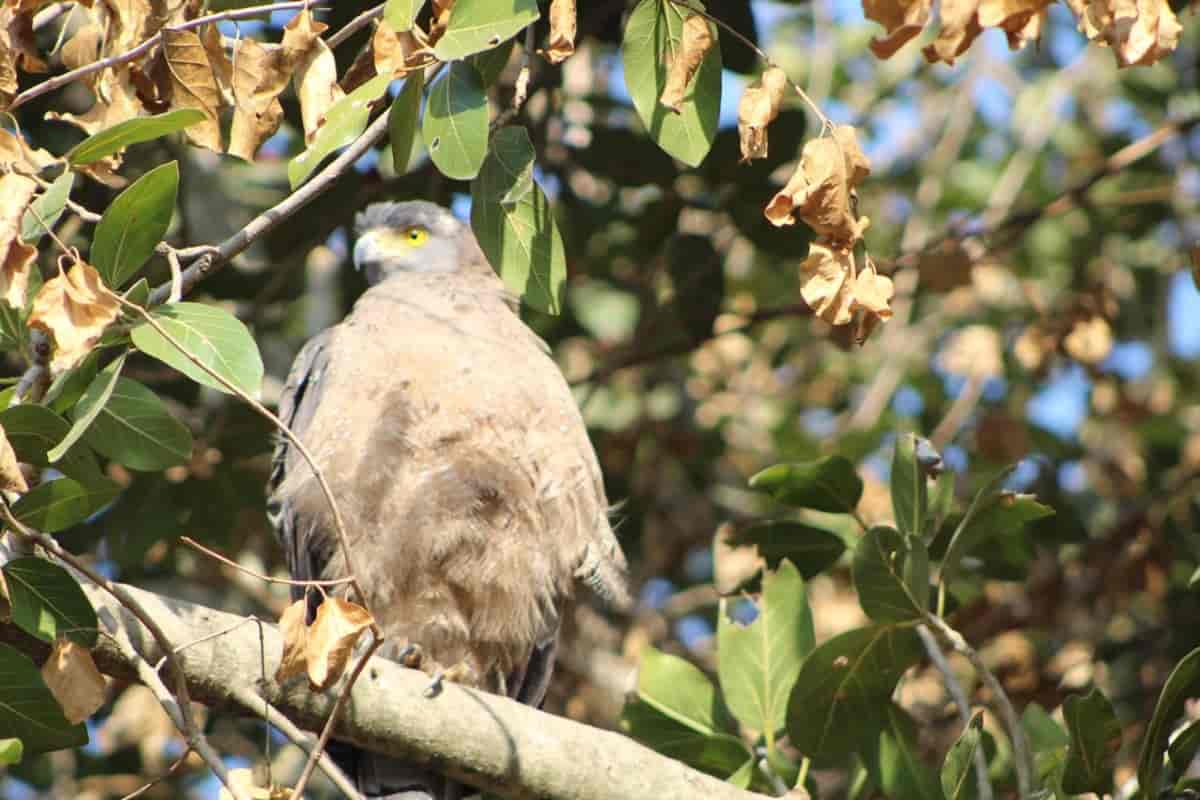
How to reach Gir National Park?
By Air – There is no direct flight to Gir. The nearest airport is in Diu, which is 92 kilometers (2 hours’ drive) from the reserve region. Rajkot, the next closest airport, is approximately 160 kilometers (3.5 hours’ drive) from Gir. Rajkot has direct flights from both Delhi and Mumbai. Diu is not well-connected.
By Rail – Regular trains run from Ahmedabad and Rajkot to Junagadh (65 kilometers from Gir) and Veraval (45 km from Gir). After arriving in Junagadh/Veraval, take a taxi or bus to Sasan Gir. Trains (meter-gauge line) run daily from Junagadh and Veraval to Sasan Gir station, but their timetables may conflict with your jungle safari schedule.
By Road – As previously stated, Gir National Park is 60 kilometers from Junagadh and 360 kilometers from Ahmedabad. From most locations in Gujarat, you can take a bus or a taxi to get to the Sasan Gir region. Several private and government-owned vehicles can drop you at the closest access point to the sanctuary. Use Google Maps to locate the exact entrance to Sinh Sadan.
What is the best time to visit Gir National Park?
It can be very hot in April and May, but this is the best time to spot Asiatic lions. Artificial bodies of water are created throughout the forests to provide animals with easy access to drinking water. This makes it easier for visitors to spot the elusive mammals, but the heat (which can reach 45°) can be oppressive. It is best to visit Gir National Park between November and March when the weather is cool and pleasant. It gets very cold at night in late December and early January. Due to the monsoon season, the park is closed from 16th June to 15th October every year. The Devaliya Safari Park (Gir Interpretation Zone) is open year-round but closed every Wednesday.
Wildlife in Gir National Park?
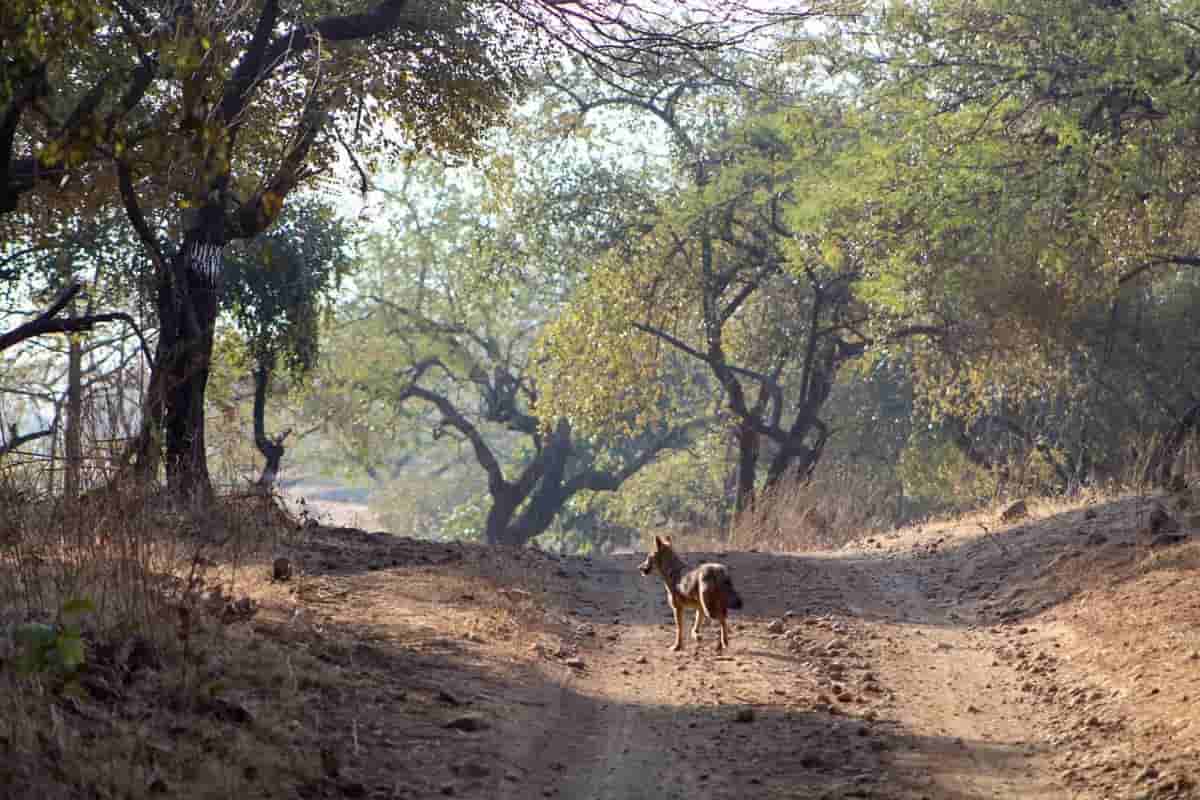
The Asiatic lion is the main draw of the Gir National Park, as it’s the only place in the world where they can be found. In addition to these beautiful creatures, visitors to Sasan Gir can see 2,375 species of fauna. The most spectacular and popular species include Indian leopards (over 300), striped hyenas, crocodiles, cobras, reindeer, sambar, jackals, foxes, vultures, Indian Mongooses, wild boar, porcupines, monitor lizards, jungle cats, eagles, owls, and many other rare species. Overall, wildlife enthusiasts will have a memorable experience in the densely forested hills, plateaus, and valleys of the Gir Forest.
How to plan for a Jungle Safari in Gir National Park?
To visit the forest, you must book your Jungle safari well in advance. Permits are only available online and can be reserved at girlion.gujarat.gov.in. The National Park issues a limited number of safari permits each day, which sell out quickly, so book reservations a few days in advance. To book a safari, you must have your identification details. If you are an Indian citizen, the permit costs Rs 800-Rs 1000 for up to 6 people. For foreigners, the entry fee for a group of six is between Rs 6560 and Rs 8200. The permit does not cover guide and safari vehicle fees, and must be paid separately. Open SUVs are available for rates ranging from Rs. 2500 to Rs. 4500, while guides charge between Rs. 400 and Rs. 700.
Once you have obtained a permit, you must arrive at the starting point 30 minutes before the safari for verification. They will verify the member’s ID for the online reservation and issue you the safari permits. Private vehicles are not permitted in the jungle, and each jeep can carry a maximum of six people. In short, a Gir Jungle Trail would be expensive. The jungle has 13 routes that intersect at various points. The forest authority assigns you a route and requires you to stick to it. The earlier you go, the more likely you are to get a better route.
Approximate timings for the Jeep Safari: The forest is open Monday to Sunday. The safari duration is three hours. Safari times may vary slightly by season.
Winter Morning: 6:45 am to 9:45 am & 8:30 am to 11:30 am
Winter Evening: 3 pm to 6 pm
Summer Morning: 6 am to 9 am & 8:30 am to 11:30 am
Summer Evening: 4 pm to 7 pm
What are the chances of spotting the Asiatic lion in Gir National Park?
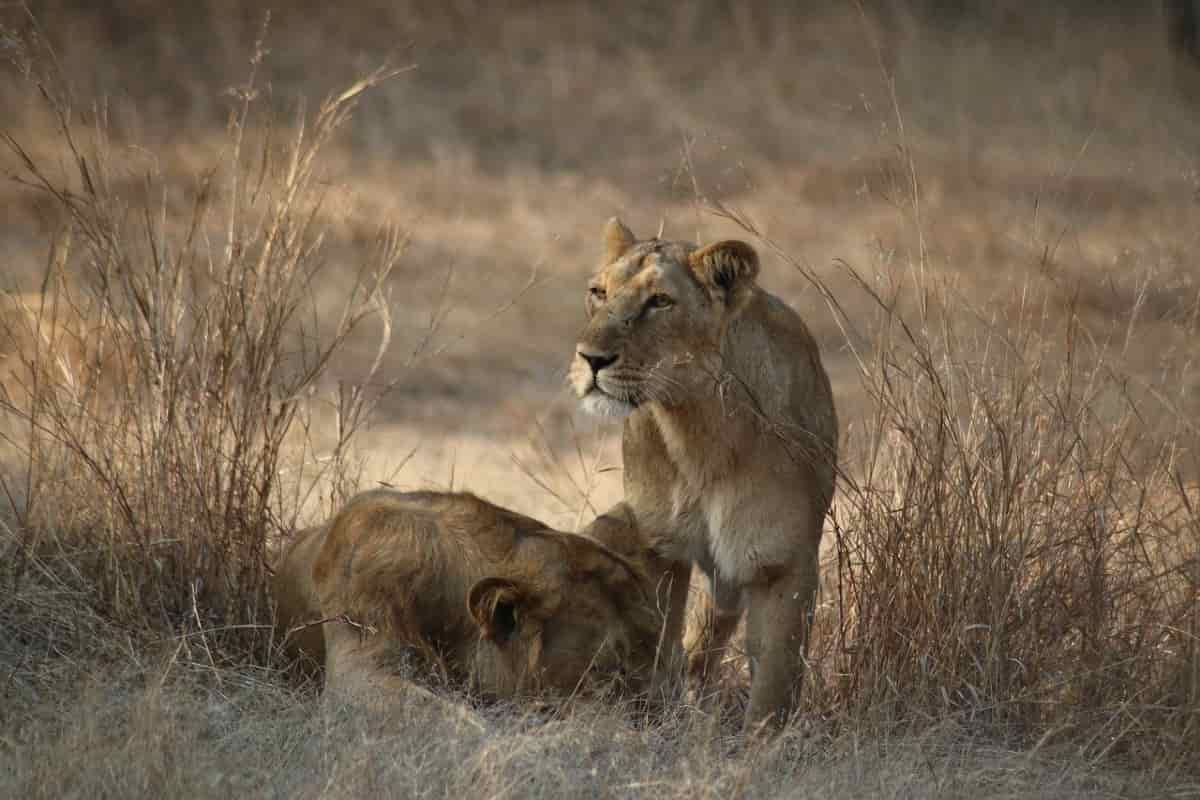
Lions, unlike tigers and leopards, are gregarious creatures. They are the only large cats that live in family groups known as prides. If you spot a lion, you’re likely to see more than one, which adds to the thrill. According to local guides, you will spot a lion 80% of the time. However, the type of sighting will vary depending on the route, time of day, and season. Early-morning safaris are best because lions are most active then. They usually sleep in the bushes during the day and are only visible from a distance. The second option should be an evening safari, and the last option should be an 8:30 am safari. If you visit the park between March and May, you have a good chance of seeing the lion. The giant beasts are out looking for water, and this is your chance to spot them. During the summer, there is a good chance of glimpsing lions with cubs.
Lions are frequently tracked with the assistance of a rescue team. They would find out the lions’ exact location and spread the word. You would soon see the jeeps clustering near the lion’s whereabouts. Unlike African lions, Asiatic lions do not live in large groups, so you are more likely to see 1-2 lions together rather than a pride as seen in African jungles.
If you are unable to obtain a permit or see a lion during a jungle safari, you have another option. Visit Devalia Safari Park, a fenced-in area of the sanctuary where rescued animals are housed. The sightings are guaranteed, but the atmosphere is more akin to a zoo. There is no need to book in advance, and you are taken around by bus.
Tourist Attractions in Sasan Gir?
In case you are staying in Sasan Gir for a couple of days and have some time between safaris, you can visit the local attractions like Kamleshwar Dam, Crocodile Breeding Farm, Tulsi Shyam Temple, and Zamzir Waterfall.
Nearby Attractions?
If you have come this far and can afford to linger, it makes sense to visit nearby attractions.
- Somnath – It is believed to be the first of the 12 Jyotirlingas of Shiva. It is a very important pilgrimage and tourist destination in India. Bhalka Tirth, Triveni Tirth, Prabhas Patar Museum, and Somnath Mahadev Temple are worth visiting in Somnath. Somnath is around 70 km away from Sasan Gir.
- Girnar – Situated 60 km from Sasan Gir, Girnar is one of the most ancient and sacred pilgrimages for the Jain community. Not only did Jain Tirthankara Neminath attain Nirvana at Girnar, but Hindu Lord Dattatreya also performed penance on the top of the hill. Due to its religious significance, several Jain and Hindu temples are built on the ridges and summit of the 3,660-foot-long hill. Previously, you had to climb 9,999 steps to reach the final summit, but now a ropeway has been introduced that drops you at Ma Ambaji Temple, located midway at 5,000 steps.
- Diu Island – A popular beach destination, Diu is located 95 km from Gir. The island is popular for Diu Fort, Naida Caves, St. Paul’s Church, Diu Museums, Panikota Fort, and multiple beaches.
Accommodation at Sasan Gir?
If you are looking for a luxury stay, you have many options. Woods at Sasan, Gir Serai, Postcard Gir, and The Fern Gir Forest Resort. Woods at Sasan is a contemporary hotel with manicured gardens and a range of activities to entertain you. Gir Serai is located on the edge of the Gir Forest and offers the renowned Taj hospitality. Postcard Gir is a new entrant offering rustic yet luxurious accommodations that seamlessly blend with the surrounding terrain. Looking for budget options? Check out Asiatic Lion Lodge, Gir Pride Resort, Hiran Holidays, and Carina Retreat.
Valuable Tips for Gir National Park:
- If you’re going to the park in the winter, bring plenty of warm clothes. You will need gloves, caps, scarves, and jackets for the early morning safari. Wear layers that can be removed as temperatures rise during the day. Scarves and hats should be worn to protect your face and head from dust.
- The driver will stop the jeep once during the safari so that you can use the restrooms. They have built portable washrooms in strategic locations for the convenience of visitors.
- Carry your ID proofs with you, as they are checked at the safari gate
- Wear clothes in browns, greens, and other neutral shades that blend with the surrounding jungle.
- You must pay Rs 200 to carry a professional camera inside the jungle. For foreign nationals, the charges are $20
- Plastic bottles, plastic bags, and similar items are not allowed in the park. You will get thirsty during the safari, so carry water in steel bottles.
- It can be bumpy during the long drive, and your mobile phone, sunglasses, and wallet may fall out of the vehicle. So, plan accordingly.
- Sunscreen, binoculars, comfortable walking shoes, extra clothing, cameras, and other essentials should be added to your packing list.
- Alcohol is prohibited in Gujarat, and smoking is banned inside the park.
- Do not irritate or disturb the animals.
- Hiking, camping, and picnicking are not allowed within the park.
- There are a few restaurants in the region, but they all serve Gujarati or Indian cuisine.
Any more questions? I would be happy to answer them in the comments below.
This Post Has 4 Comments
This is the beautiful piece of information and its accurate as i know all because I am local of here.
Thanks for the validation
Thank you for this informative and engaging travel guide to Gir National Park!
Gir is truly a natural treasure, home to the majestic Asiatic lions and a diverse range of wildlife. Your blog beautifully captures the essence of this sanctuary, from its lush forests and vibrant birdlife to the incredible encounters with the big cats. The tips on when to visit, where to stay, and what to expect during a safari are incredibly valuable for anyone planning a trip to Gir.
The storytelling and the accompanying photos make me feel like I’ve already embarked on a virtual journey to this remarkable place. I appreciate the conservation efforts highlighted in your article, reminding us of the importance of preserving such ecosystems for future generations.
I’m now inspired to plan my own visit to Gir National Park and immerse myself in the wilderness of this incredible destination. Thank you for the inspiration and all the practical insights you’ve shared in this blog!
Really useful information. I won’t have a car while I’m there – will I be able to organise a taxi from my hotel to the start point of the safari? Thanks