
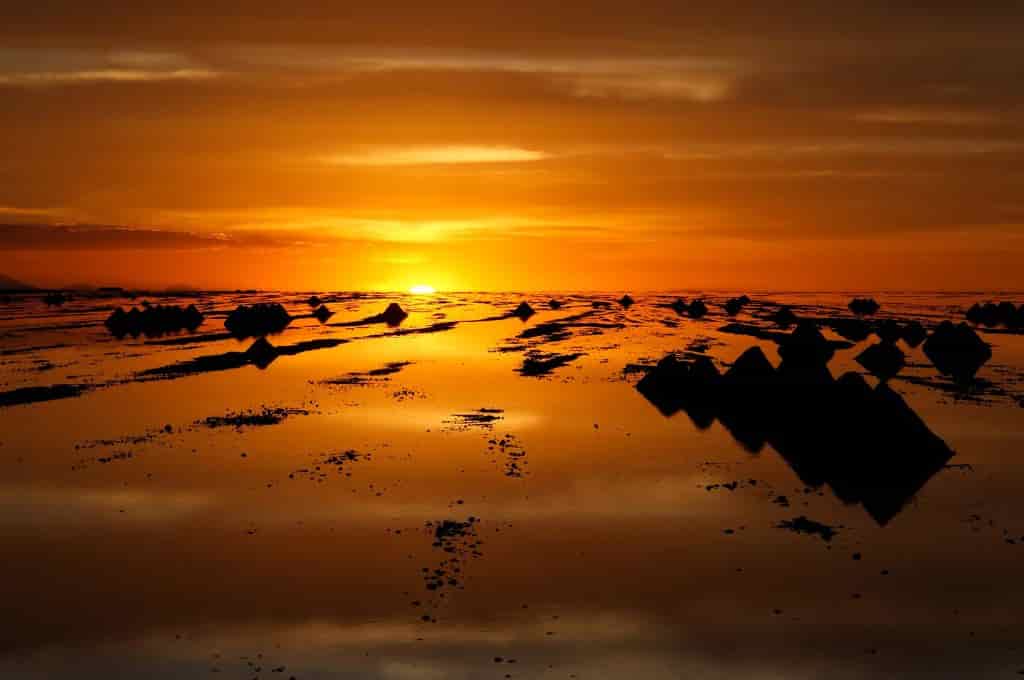
Nestled high in Bolivia’s Andes, the Salar de Uyuni stands as one of the most bizarre and desolate landscapes on Earth. Being the world’s largest salt flat, it is not only incredibly beautiful but also one of South America’s most unforgettable travel locations. This natural wonder, which extends like an immense white canvas as far as the eye can see, appears to be from another world rather than an earthly location. During the dry season, it seems like an unending desert of geometric salt formations, while during the wet season, it transforms into a gigantic mirror that perfectly reflects the sky, blurring the line between heaven and earth.
The sheer magnitude and beauty of Bolivia’s salt flats will take your breath away. From historic lakes and unique fauna to lithium reserves and incredible optical illusions, Salar de Uyuni is home to remarkable tales, scientific wonders, and an intricate cultural tapestry. The striking, surreal landscapes attract not only nature lovers, adventurers, and photographers but also history buffs eager to learn about the region’s mining legacy and indigenous cultures. Let me share a few of the most interesting facts about this extraordinary destination.
1) It Is the Largest Salt Flat in the World
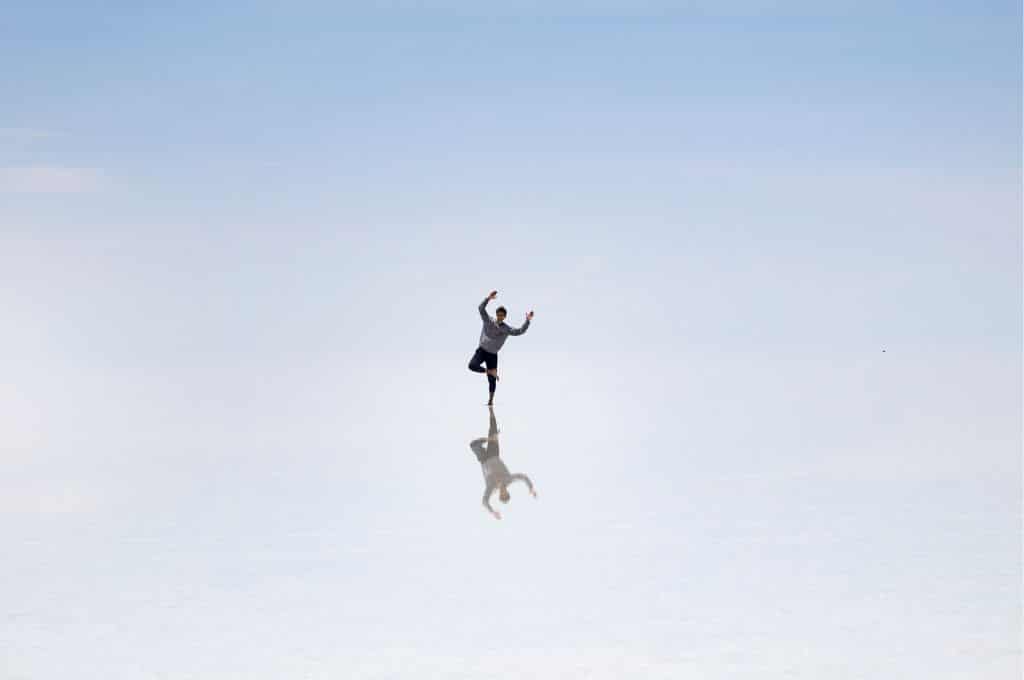
Salar de Uyuni is the largest salt flat in the world, spanning over 10,000 square kilometers. It is situated at an elevation of 3656 meters above sea level, thus necessitating preparedness for high-altitude conditions. This extensive white landscape was formed thousands of years ago when prehistoric lakes evaporated, leaving behind thick layers of salt and minerals. The salt flat appears as a vast, white crust against the expansive blue sky. Exploring the Salar generally requires at least half a day.
2) The Salt Flats can be seen from Space
Thanks to its immense size, pure whiteness, flat surface, and striking contrast with the surroundings, Salar de Uyuni is easily identifiable from space. It appears as a vast white patch on the Bolivian map. Neil Armstrong, during his time on the moon, noticed a large, glowing white region on Earth and initially believed it was a huge glacier, but it was actually the Salt Flats. After his lunar journey, he visited Salar de Uyuni to see it for himself and was mesmerized by its magnificent grandeur.

3) It Becomes the World’s Largest Natural Mirror
One of Salar de Uyuni’s most striking geographical features has led to it being referred to as the place where “Earth meets the sky.” During the rainy season, which typically spans from December to March, a thin layer of rainwater covers the salt flat, creating a mirror-like effect that reflects the sky and clouds. The Salt Flats become the world’s largest natural mirror, and it becomes nearly impossible to distinguish where the earth ends and the sky begins. This extraordinary, dramatic landscape offers some of the most breathtaking and mesmerizing sights our planet has to offer, especially at sunrise and sunset. Photographers and tourists from around the globe travel to witness this magical and surreal natural spectacle.
4) The Salt Layer Is Incredibly Thick
The salt crust at Salar de Uyuni in Bolivia generally ranges from 2 to 10 meters in thickness. It is only a few centimeters thick at the peripheries but becomes considerably thicker in the deepest parts of the ancient basin. Beneath this crust lie stratified layers of mud and brine that extend to a depth of up to 120 meters. Given the extensive size and thickness of the Uyuni Salt Flats, it is reasonable to infer that a substantial quantity of salt is available. Experts estimate that the flats contain over 100 billion tons of salt, with only a small fraction, approximately 25,000 tons, being extracted annually by local communities.
5) It Holds One of the World’s Largest Lithium Reserves
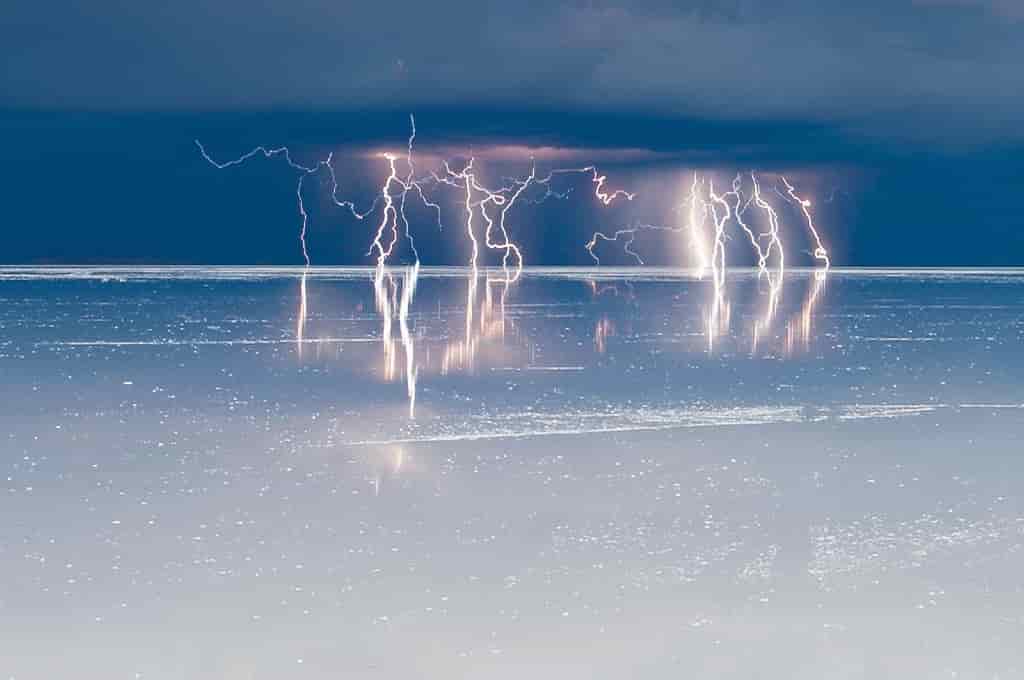
Salar de Uyuni is home to a number of valuable minerals, including lithium and salt. Lithium is regarded as “gold” and is increasingly seen as the new oil due to its vital role in battery manufacturing. Bolivia, Chile, and Argentina make up the Lithium Triangle, which collectively holds almost half of the world’s reserves. Beneath the salt crust of Salar de Uyuni lies a vast reserve of lithium — essential for making rechargeable batteries used in smartphones, laptops, and electric vehicles. While the exact quantity of lithium in Salar de Uyuni is uncertain, estimates put it at about 20 million tonnes, making it the world’s largest deposit.
6) It is the Best Place on Earth to Calibrate Satellites
Generally, GPS satellites are calibrated by reflecting light off huge surfaces such as the ocean. However, when the mirror-like surface of Salar de Uyuni becomes visible during the rainy season, the flat and reflective surface, combined with clear skies and high altitude, creates far superior conditions for satellite calibration than those over the ocean. Amazingly, the Uyuni salt flats have a vertical variation of less than three feet across their whole span. Agencies such as NASA and ESA leverage this unique environment to study celestial bodies and cosmic phenomena. Additionally, the mirror-like surface and the absence of nocturnal light pollution make it easier to capture highly detailed images of the night sky.
7) The Landscape Creates Incredible Optical Illusions
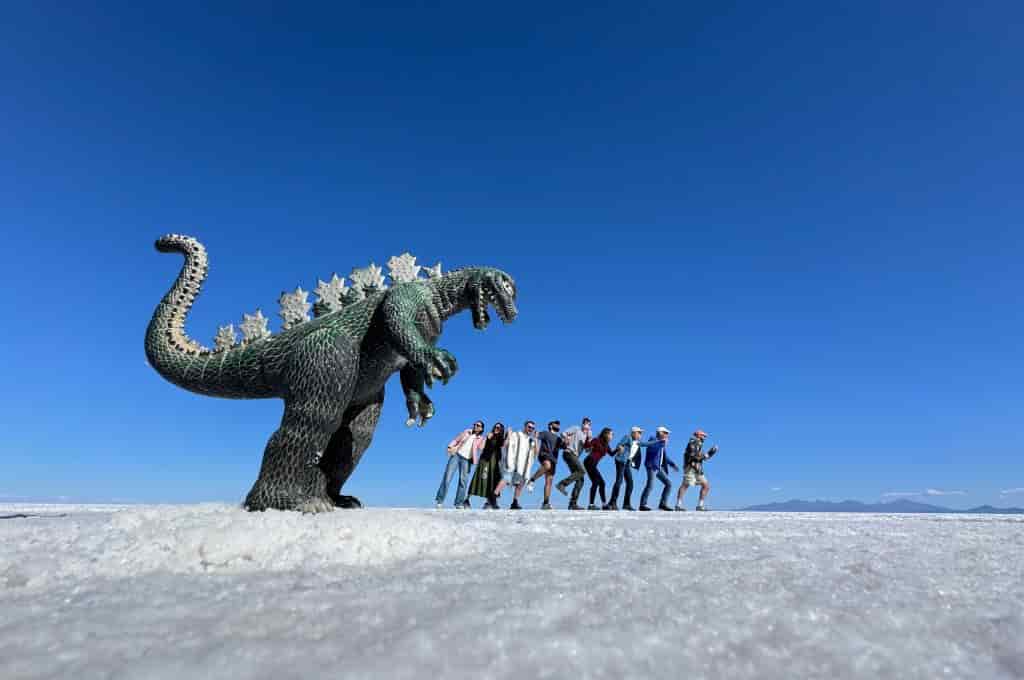
The Uyuni Salt Flats are a photographer’s delight, offering endless opportunities to capture bizarre, jaw-dropping photos. The flat, reflective surface produces optical illusions that blur the lines between the sky and the ground, helping visitors to take hilarious perspective shots in which people appear diminutive, gigantic, or floating in the air. Professional and amateur photographers alike visit the salt flats to capture surreal images that play around with scale, perspective, and the interplay of light and shadow. Salar de Uyuni is one of the best places in the world for creative photography.
8) There Are Hotels Made Entirely of Salt
A memorable experience at Salar de Uyuni is staying in salt hotels, where everything from walls to furniture is made of salt blocks. The Palacio de Sal, or Salt Palace, is constructed entirely from salt and demonstrates the skill of local artisans. This unique hotel features salt floors, walls, and salt furniture, offering visitors an immersive experience. Guests can also admire salt sculptures and monuments carved from salt, which highlight the ingenuity and expertise of local craftsmen.

9) It Is Home to Interesting Fauna.
Even in this seemingly barren, extreme environment, animals live and thrive. The Uyuni Salt Flats are home to foxes, hares, llamas, and several species of flamingos. Certain species, such as the Andean fox, Viscachas, and Vicuñas, have adapted to survive in harsh, arid habitats. Colorful flamingos can be seen around the lakes near the salt flats and lagoons. Their bright pink feathers create a striking contrast with the endless white landscape. Laguna Colorado, known for its striking red color, is a popular spot for birdwatching, with thousands of flamingos feeding in its shallow waters. Watching a flock of flamingos parade by is an unforgettable experience.
10) A legacy dating back to Prehistoric Times
The Uyuni Salt Flat dates back around 40,000 years, when the region’s highlands were part of a vast prehistoric lake called Lake Minchin. This lake was formed during periods of heavy rainfall and high humidity. Over time, Lake Minchin evolved into Paleo Lake Tauca, which had a maximum depth of 140 meters. As the climate became drier, the water gradually evaporated, leaving behind thick layers of salt and minerals. Today, the remains of these ancient lakes include the Uyuni Salt Flat, Coipasa Salt Flat, and two new lakes—Lakes Poopó and Uru Uru.
11) It is Full of Hexagons
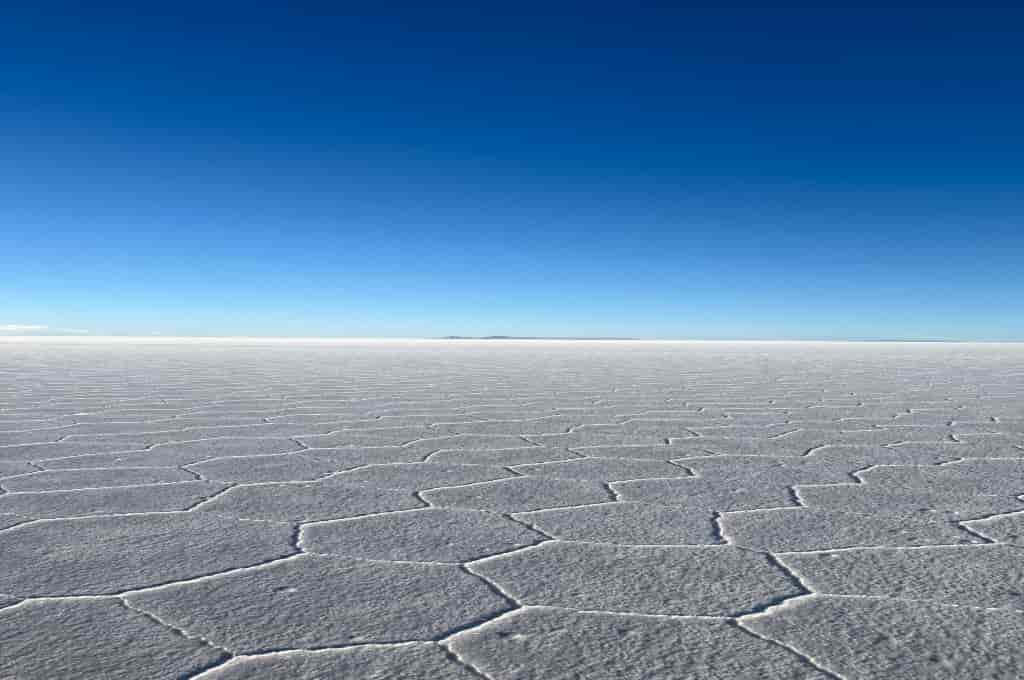
The striking, geometric “honeycomb” patterns across the world’s largest salt flat are a natural occurrence. During the dry season, the surface of the salt flat endures extreme conditions, characterized by sharply rising daytime temperatures and significantly dropping nighttime temperatures. Due to this thermal cycle, the salt crust fractures into these iconic six-sided shapes, helping to reduce stress and pressure as it expands. The endless, hexagonal formations stretching to the horizon are perfectly symmetrical, creating a hypnotic visual effect.
12) It has Two Fascinating Islands
In the sprawling El Salar de Uyuni, there are many small islands. The two most well-known are Isla Incahuasi and Isla el Pescado. Although both have a similar volcanic origin and are home to giant cacti, Incahuasi is the more accessible and often visited of the two. Incahuasi Island means “the house of the Inca,” and it houses giant cacti that are up to 32 feet tall! These notable cacti, known as Cardones, have endured for millennia within one of the world’s most arid and brutal ecosystems. Isla del Pescado, located further west, is less popular and receives fewer visitors. It’s the best spot to witness the spectacular Uyuni sunrise.
13) It has an open-air Train Cemetery
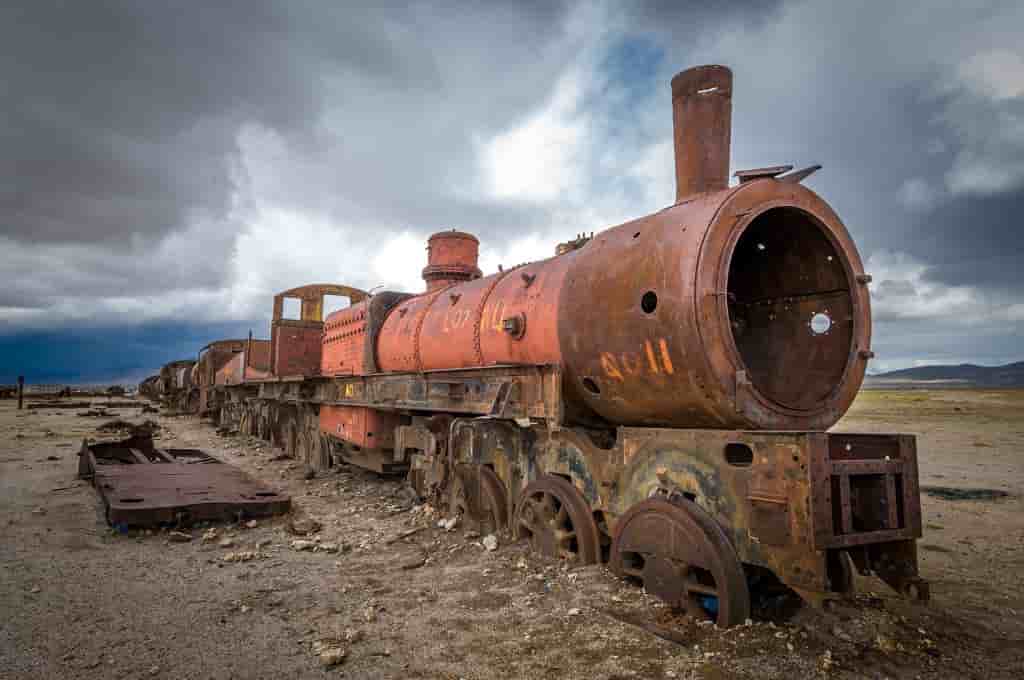
In the 19th century, El Salar de Uyuni was a major railway hub connecting Bolivia to Chile and promoting trade. One of the haunting sites in Uyuni is the train cemetery, where the remains of the orange wagons lie abandoned, gathering salt and rust since the 19th century. What was once the country’s greatest symbol of progress was looted by greedy crooks and is now just another attraction in the city. This area offers a glimpse into the history of Bolivia’s railways and is an excellent spot for photography, especially for travelers who enjoy ruins and industrial decay
14) It is a Popular Location for Film Shoots
The Salar de Uyuni in Bolivia is a popular filming location. Its striking, mirror-like landscapes have served as striking backdrops for numerous films and documentaries. The extraordinary, extraterrestrial-like vastness of this white expanse makes it an ideal setting for science-fiction productions. From Westerns to Hollywood blockbusters, Salar de Uyuni has hosted them all. Some crucial scenes from ‘Star Wars: The Last Jedi’ (2017) were filmed on these salt flats, which functioned as the real-life site of the rebel base named ‘Crait.’ Other films shot here include ‘Salt and Fire,’ ‘The Fall,’ and ‘Blackthorn.’ The BBC and National Geographic have also used this location to film numerous documentaries.
Salar de Uyuni is a spectacular fusion of scenic splendor, scientific significance, and cultural heritage, making it more than just a tourist spot. Whether you’re passionate about geology, photography, nature, or adventure, these magical salt flats offer a unique experience that cannot be replicated anywhere else on Earth.